Every teacher remembers the first sequence they built that truly worked: the room breathed together, the class landed exactly where it was meant to, and nobody looked at the clock. And most of us remember the opposite too, the class that felt like a random pile of poses. The difference is rarely talent. It is structure. A yoga sequence is a deliberate journey with a shape, and once you understand that shape you can build a coherent class in any style, for any length, for any room. Here is how.
Start with an intention, not a pose list
Before you write down a single asana, decide what the class is for. A clear focus gives every later choice a reason to exist. It might be a body area (open hips, healthy shoulders), an energetic quality (grounding after a hard week, uplifting on a dark morning), a peak pose you want to build toward, or a theme you weave through your cueing. When you are unsure whether a pose belongs in the class, ask a single question: does it serve the intention? If it does not, it goes. That one discipline is what separates a sequence from a playlist.
The universal arc of a yoga class
Almost every well-built class, whatever the style and whatever the length, moves through the same five phases. The proportions shift, a yin class lingers, a power class drives, but the arc holds:
- Arrive. Settle the breath and attention. A seated or reclined centering, a few conscious breaths, the intention named.
- Warm up. Mobilize the spine and the specific joints the class will ask most of. In flowing styles, this is where sun salutations live.
- Build and peak. The heart of the class. The main work rises toward the most demanding shape, the peak pose.
- Cool down. Counter the peak. Gentle backbends, twists and forward folds return the body to neutral.
- Rest. Savasana, where the whole practice integrates. Never trim it to fit one more flow.
If you internalise nothing else, internalise this shape. It is the skeleton under every good class, and it works whether you have thirty minutes or ninety.
How to sequence toward a peak pose
The most reliable way to build the middle of a class is to work backwards from the peak. Name the pose you want to arrive at, then list the actions it asks of the body: which joints open, which muscles fire, what balance, strength or focus it needs. Each of those becomes an ingredient, and every warm-up pose you choose becomes a smaller rehearsal of one ingredient. By the time your students reach the peak, their bodies have already practised its parts in safer, simpler shapes, so the peak feels earned rather than sprung on them. We walk through a full worked example, building a whole class toward Crow pose, in our guide to peak pose sequencing.
Sequencing changes with the style
The arc is universal, but the pacing and the transitions are not. This is where teachers most often go wrong, applying a flow mindset to a hold-based class or vice versa. A few pointers, each with a deeper guide:
- Vinyasa links one breath to one movement, so transitions carry the class and repeated patterns create rhythm.
- Hatha holds poses for several breaths and sequences around alignment and counter-poses.
- Yin uses long, supported holds to reach the connective tissue, with only a handful of shapes.
- Restorative fully props the body so the nervous system can down-shift into deep rest.
- Beginner classes keep the vocabulary small and repeat it, so students build confidence.
- Chair yoga makes the entire practice accessible from a seat, ideal for mixed-ability rooms.
The building blocks: sun salutations and transitions
Two craft skills lift a sequence from functional to beautiful. The first is the sun salutation, the repeating warm-up that establishes the breath-movement rhythm and heats the body for what follows. Learn Surya Namaskar A and B well and you have a dependable on-ramp for almost any flowing class. The second is transitions: group your poses by orientation and foot position so each one hands over smoothly to the next, with no awkward jumps from standing to lying and back. If you can move through your own draft without pausing to think, your students will be able to as well.
Fit the sequence to the clock
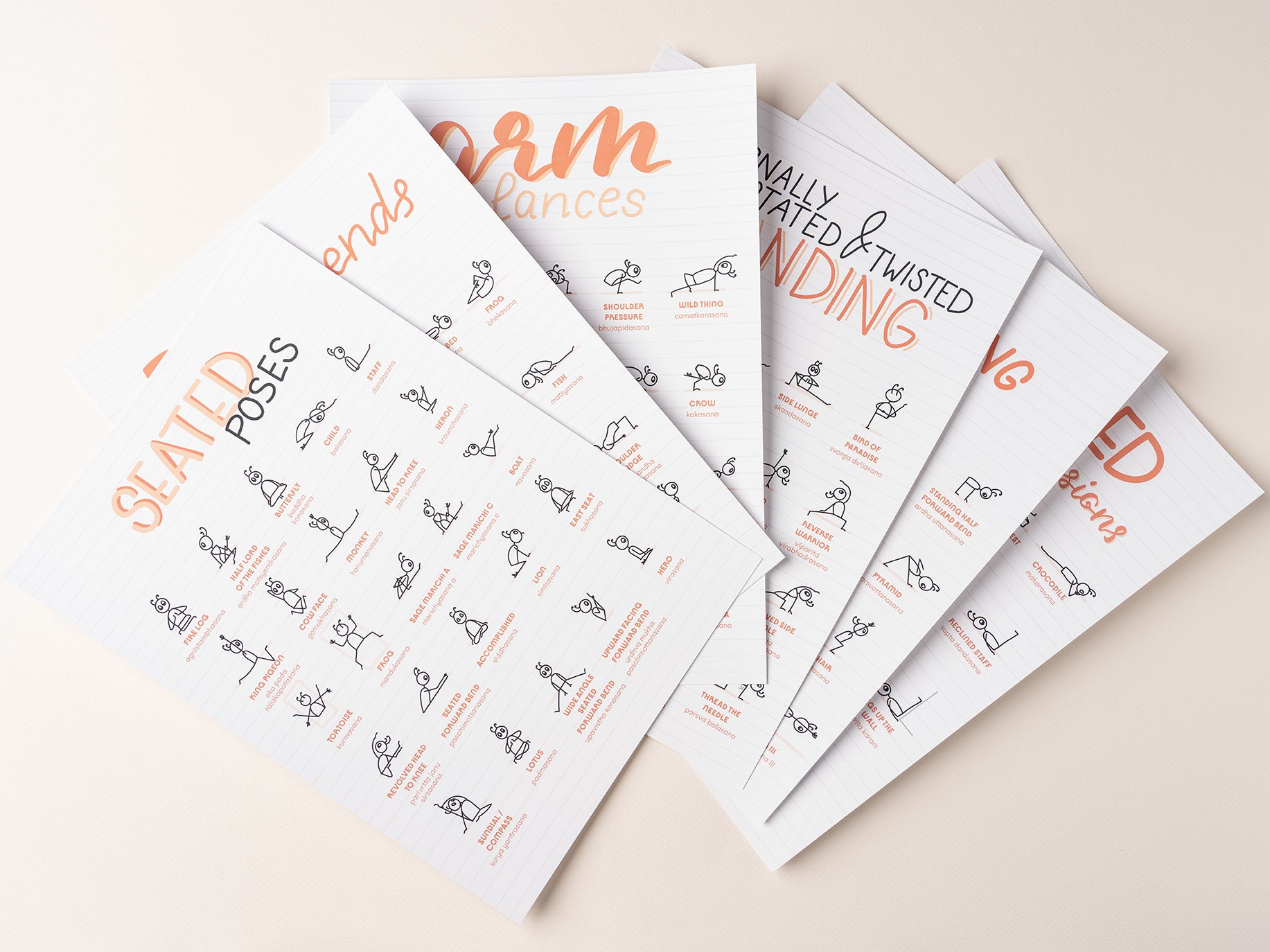
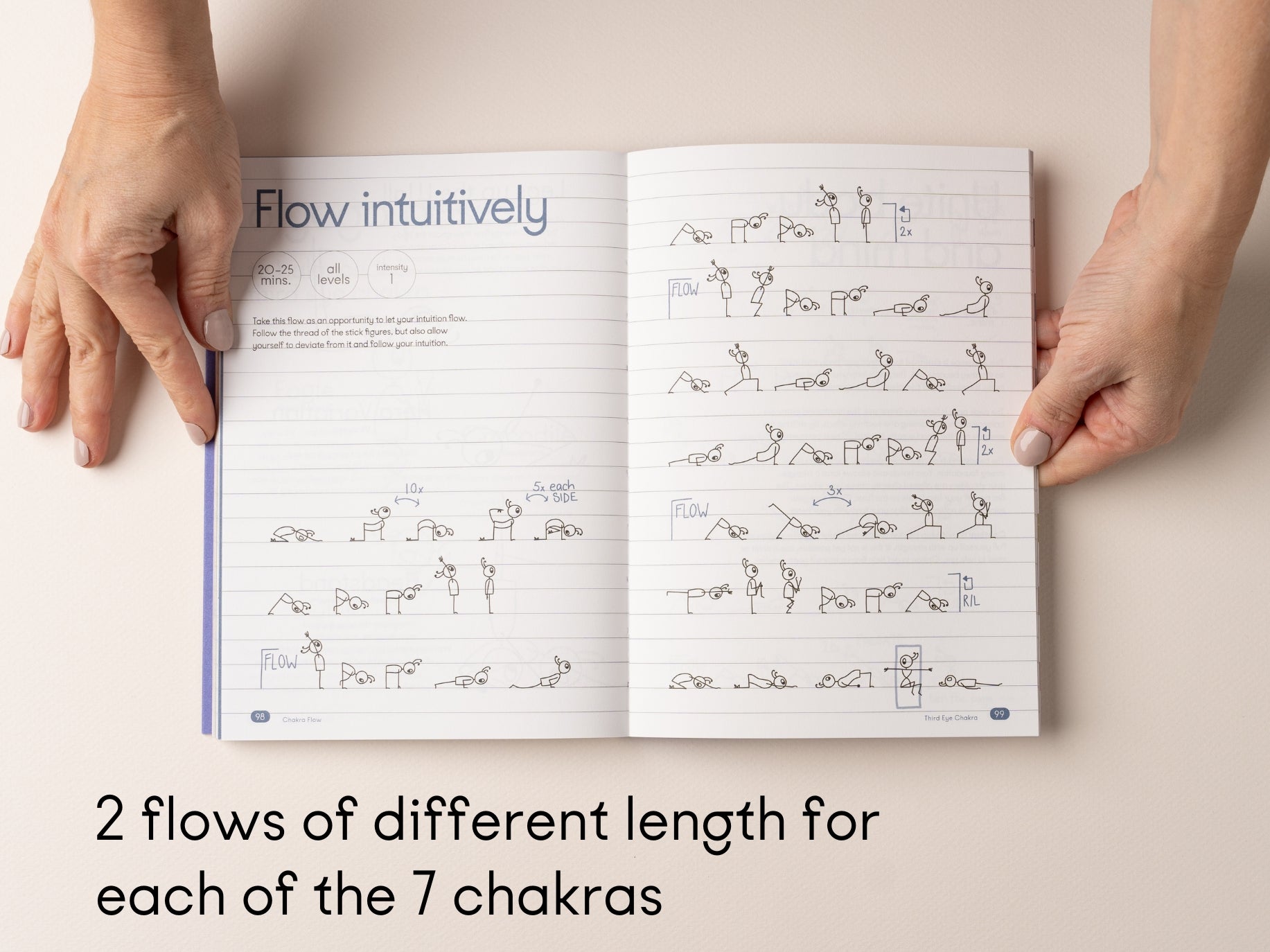
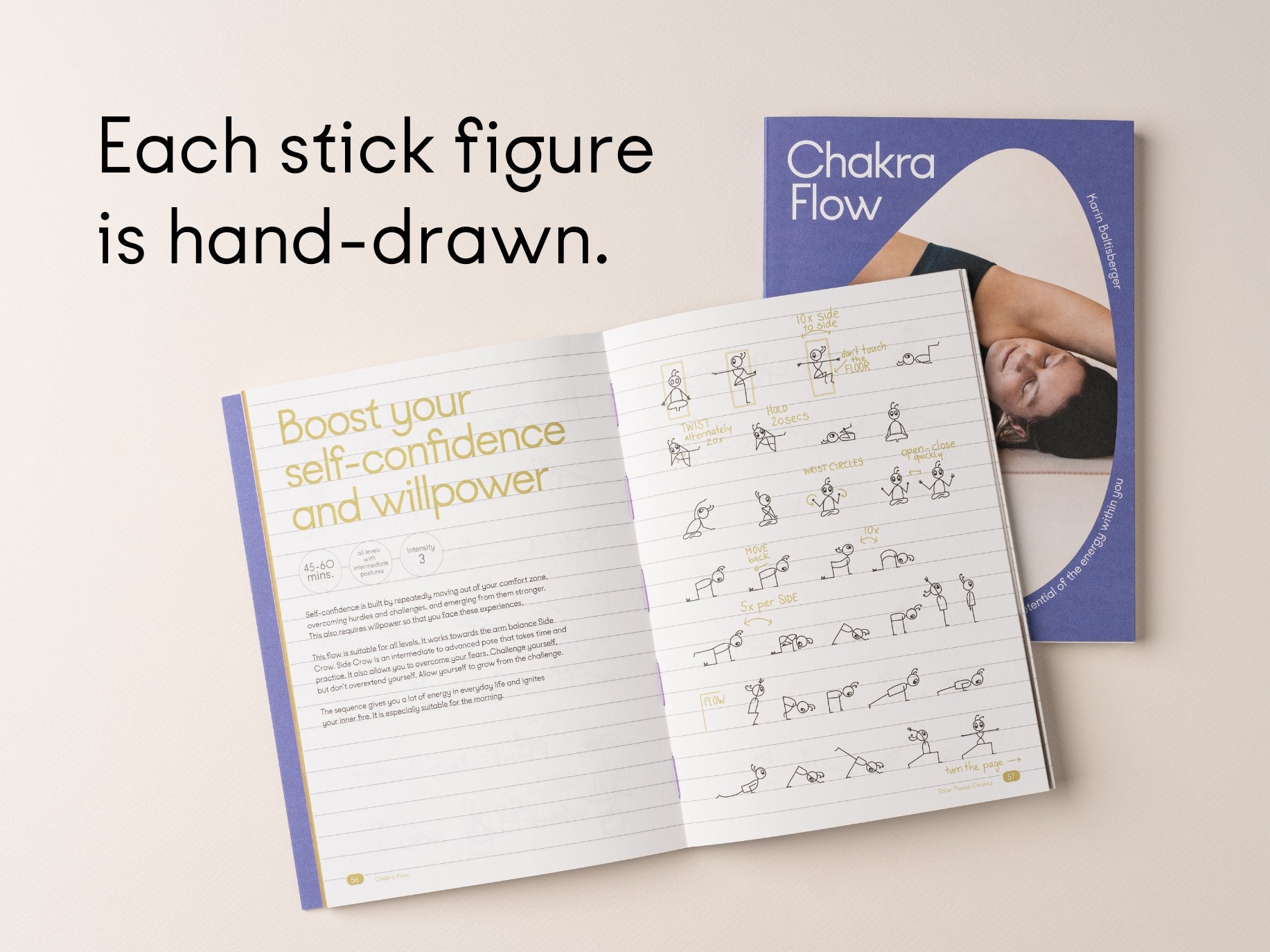
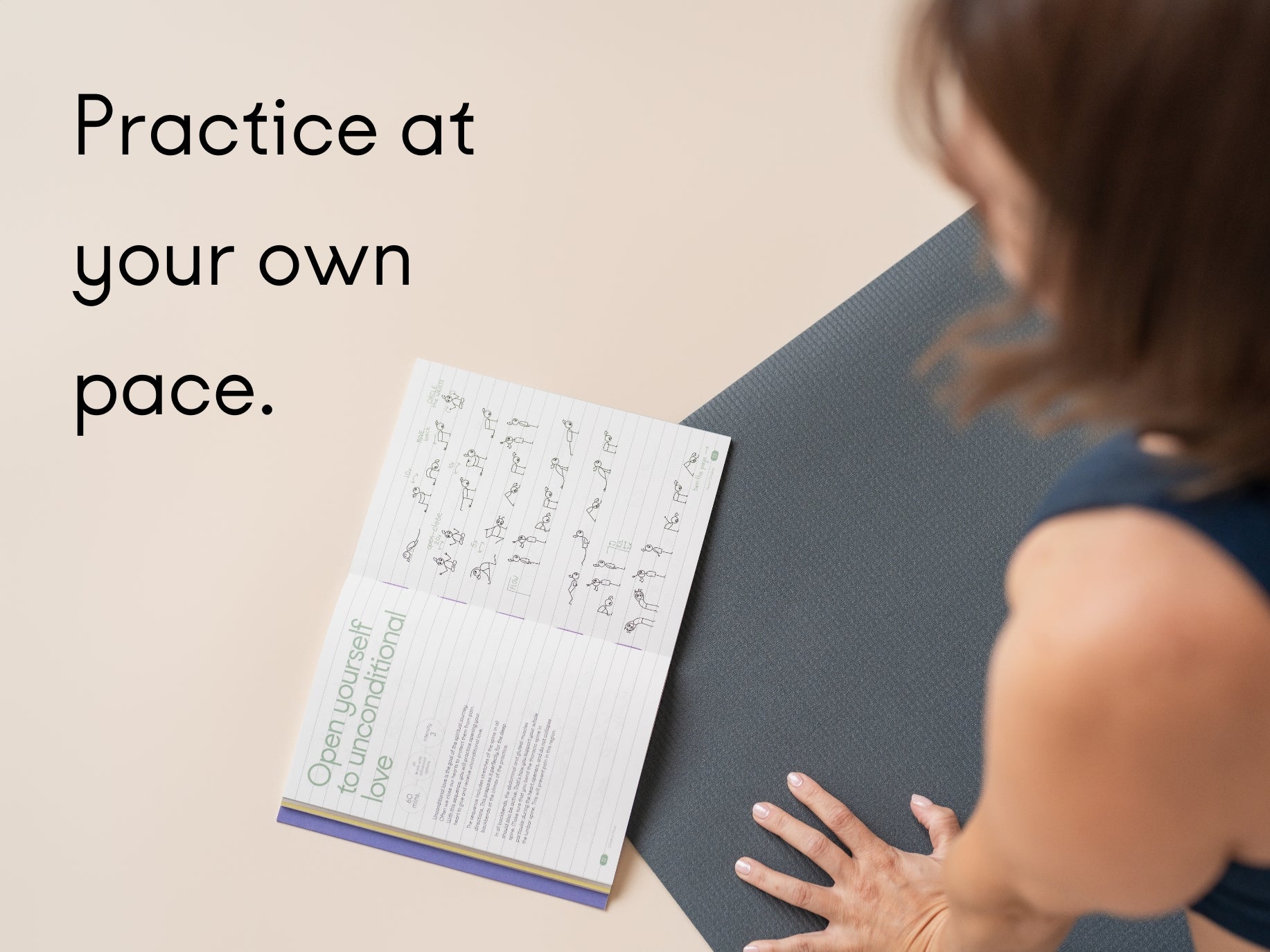
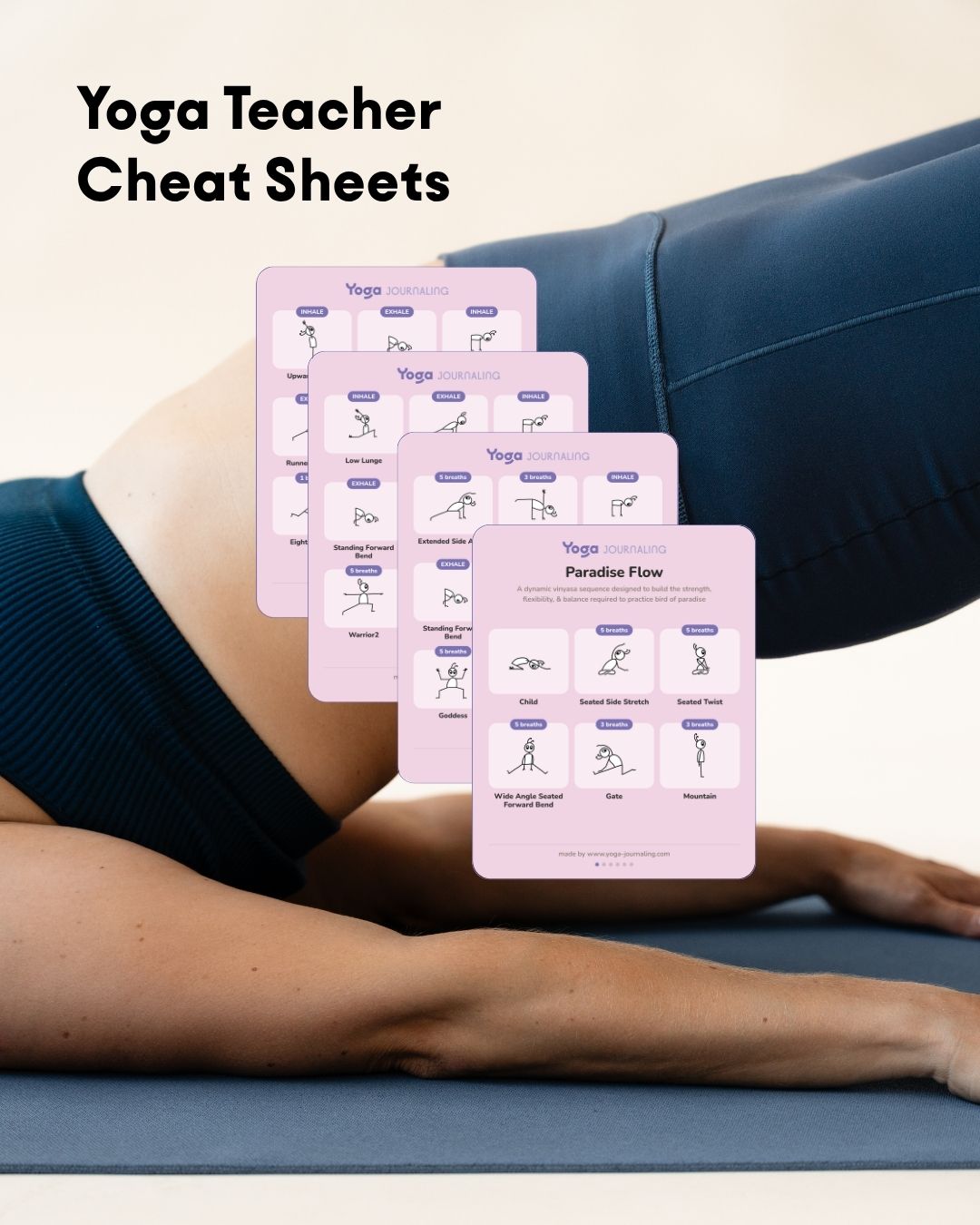
A sequence has to fit the time you have. A 60-minute class gives room for a full, unhurried arc; a 30-minute practice keeps the same shape but shortens every phase, never the rest. The simplest way to keep your pacing honest is to write the sequence down. A printable sequence sheet on the floor lets you teach with your eyes on your students instead of your notes, and handed to students after class it turns a single session into something they can practise at home.
Common sequencing mistakes to avoid
- Springing a demanding pose with no preparation for the joints it loads.
- Bouncing between standing and floor work, which drains the class's momentum.
- Cramming in new poses every few breaths instead of deepening a few.
- Sequencing your own advanced practice rather than the room in front of you.
- Cutting Savasana short to buy more time. It is the pose that makes the rest land.
Build your next class the easy way
Once you know the shape, the mechanics of planning should not eat your evening. The Yoga Journaling Flow Builder lets you drag from 200+ illustrated poses into a class, see the whole arc at a glance, add your cues and phase markers, and download a clean, printable PDF, in colour or black and white, in a couple of minutes. You can even play any flow back pose by pose in a guided player to preview it or practise along. It is free to start: build your sequences and download your first three PDFs at no cost, no credit card needed.
Create your first yoga sequence free →
New to planning classes, or want the full method in one place? Read our complete guide, How to Create a Yoga Sequence, with example flows for every style.